Guide · 7 min read
The Complete Guide to Home Care in the South Bay
What non-medical home care includes, what it costs in the South Bay, how to evaluate an agency, and how to get started.
From the A Precious Elder team · Published February 12, 2026 · Updated September 9, 2026
Key takeaways
- Non-medical home care covers personal care, companionship, meals, housekeeping, and mobility help, and does not require a nurse.
- Cost depends on the schedule and the level of care, and most agencies require a minimum visit length.
- The best agencies screen and train caregivers, carry insurance, and send a backup when your regular caregiver is out.
- Most families start small, with a few hours a week, and add hours as needs change.
What is non-medical home care?
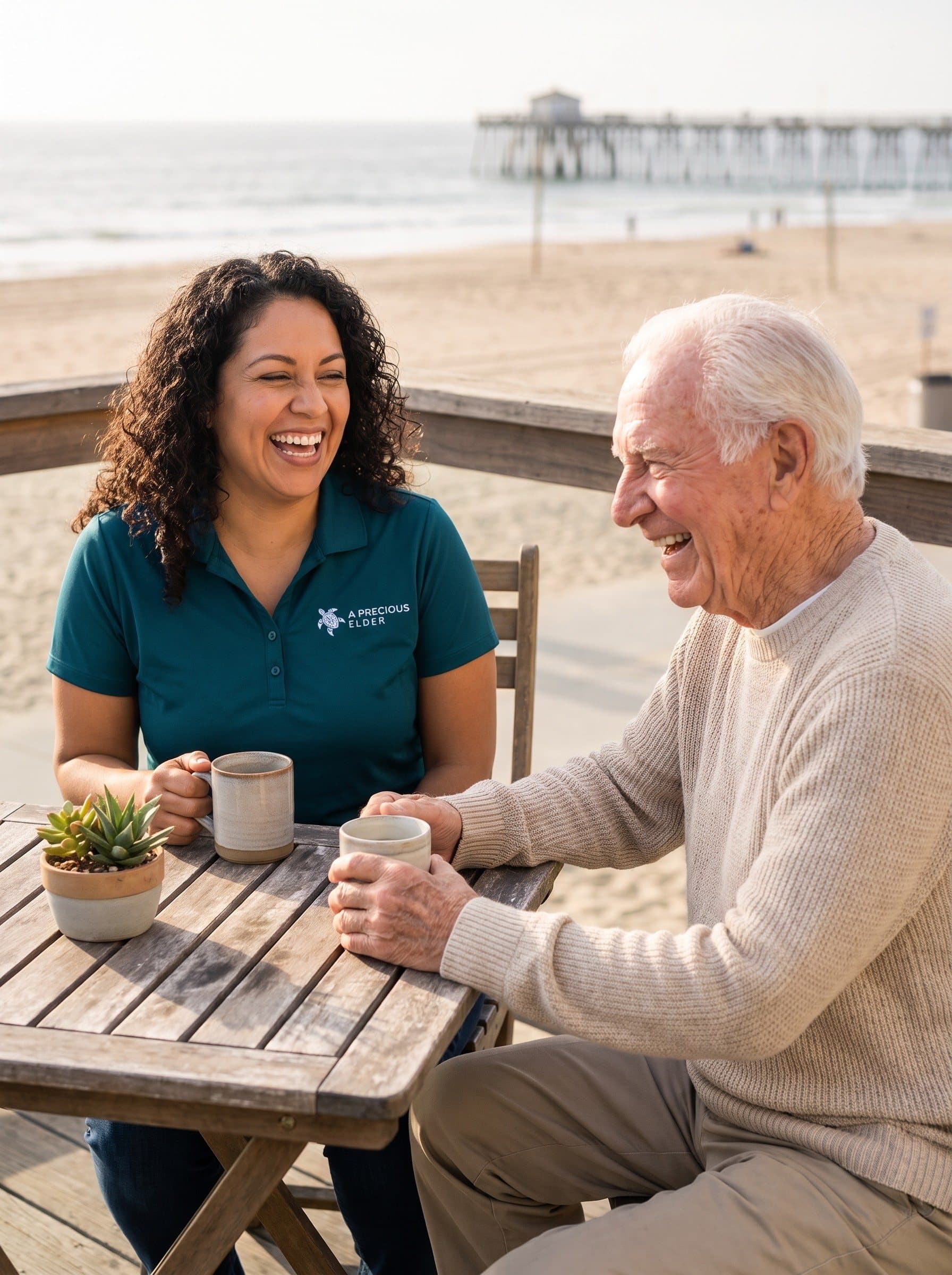
Non-medical home care is hands-on help with daily living that does not require a nurse. A caregiver comes to your parent's home and helps with bathing, dressing, meals, laundry, errands, walking, and company. It is different from home health, which is skilled nursing or therapy ordered by a doctor and delivered by a licensed clinician.
The idea behind it is simple. People do better in familiar surroundings, near their own things and their own neighbors. Home care is also usually less expensive than assisted living when the need is part time, and it gives your parent one person's full attention instead of a staff member split across a building.
What services are included?
- Personal care. Bathing, dressing, grooming, and toileting. This is the most requested service, and the one families put off the longest.
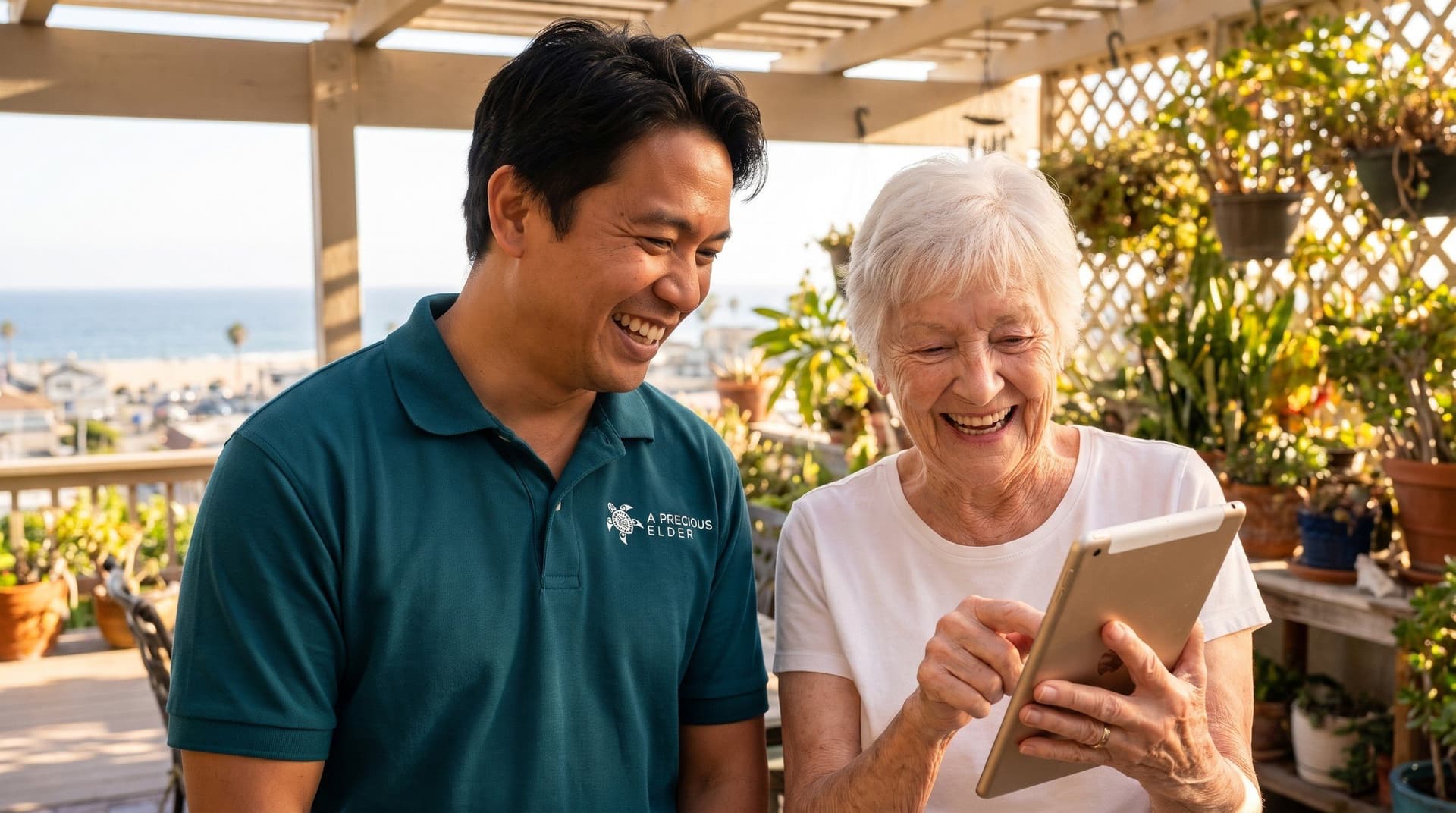
- Companionship. Conversation, walks, games, and simply being present. Isolation is a real health risk, and this is the part that quietly does the most good.
- Homemaking. Light housekeeping, laundry, grocery shopping, and meal preparation.
- Mobility assistance. Help with transfers, walking, and moving safely through the house. Good technique prevents falls for your parent and injuries for the caregiver.
- Medication reminders. Caregivers in California cannot administer medication, but they can remind, set out an organizer, and flag missed doses.
- Transportation. Rides to appointments, the pharmacy, church, and the market.
How much does home care cost in the South Bay?
Cost depends on the schedule and the level of care. A Precious Elder has a 4-hour minimum per visit and 20 hours a week minimum, with no long-term contract, and we put your cost in writing after a free in-home assessment. Twenty-four-hour care is priced per case, and overtime is billed according to California law.
What moves the number: how many hours you need, whether the visit is personal care or companionship, whether the schedule includes nights, weekends, or holidays, and whether your parent needs a caregiver with specific training such as dementia or Parkinson's experience.
Most families pay privately, but not all of them pay the whole bill. Long-term care insurance covers home care under most policies, and we help file the claims. Veterans enrolled in VA health care may qualify for Homemaker and Home Health Aide hours paid by the VA at no cost to the veteran. Medicare does not pay for non-medical home care.
How do you evaluate a home care agency?
Agencies are not interchangeable. A few things separate the good ones.
- Licensing. In California, a real agency holds a Home Care Organization license from the Department of Social Services. Ours is 194700971. Ask for the number and look it up.
- Screening and training. Caregivers should be background checked through the state Home Care Aide Registry, cleared for TB, and trained before their first shift.
- Backup coverage. Ask what happens when your caregiver is sick. An agency that cannot answer that question clearly will leave you covering the shift yourself.
- Employment status. Caregivers should be W-2 employees of the agency, covered by workers compensation and liability insurance, not contractors you are quietly responsible for.
- Communication. You should know who to call, and you should hear from someone before you have to chase them.
- Fit. Values matter more than brochures. Ours come from a Hawaiian family and the idea of Ohana, which in practice means we staff your parent the way we would staff our own.
What happens at the first meeting?
A good agency starts with an in-home assessment, and it should feel like a conversation rather than an intake form. Expect questions about daily routine and preferences, medical history and current conditions, what your parent likes to do and who they like to see, how the family communicates and who makes decisions, and any specific safety worries such as stairs, a slippery shower, or a stove left on.
That assessment is what makes the caregiver match work. Skills matter, and so does personality. A quiet retired engineer and a talkative caregiver can both be excellent and still be wrong for each other.
What is specific to the South Bay?
The beach cities are good places to grow old. They are walkable, the weather cooperates, and neighbors still know each other. A few local realities are worth planning around.
- Parking. In Hermosa, Manhattan Beach, and parts of Redondo, parking is tight. Tell your agency where the caregiver should park so shifts do not start with a fifteen-minute loop around the block.
- Stairs. Older beach houses and hillside homes in Palos Verdes and San Pedro often have steep entries and split levels. Raise it during the assessment.
- Distance. Coverage from El Segundo to Palos Verdes to Long Beach means traffic is a scheduling factor. Local agencies plan for it. Agencies dispatching from across the county often do not.
How do you get started?
- Name the need. Write down the three tasks that worry you most. Showering, meals, and driving are the usual three.
- Call two or three agencies. Consultations are free and carry no obligation.
- Ask hard questions. License number, caregiver screening, backup policy, minimum hours, cancellation terms, and how billing works.
- Start small. Two or three visits a week is enough to test the fit without upending anyone's life.
- Stay involved. Check in after two weeks and adjust. Care plans should change as your parent does.
The part nobody warns you about
Your parent may resist. Almost everyone does at first, because accepting help feels like conceding something. You may feel guilty for arranging it, as though asking for help means you failed. Both reactions are normal and both fade once the arrangement is actually working.
What usually happens is quieter than families expect. Your parent starts looking forward to Tuesdays. The kitchen stays clean. You get to be a son or a daughter again instead of a scheduler, a nurse, and a housekeeper.
How A Precious Elder can help
We are a family-owned, licensed home care agency in Hermosa Beach serving the South Bay from Westchester and El Segundo to Palos Verdes, San Pedro and Long Beach. Call us at (310) 571-5852 and we will talk through your situation, tell you honestly whether home care is the right answer, and set up a free in-home assessment if it is.
About us
A Precious Elder is a licensed family-owned home care agency in Hermosa Beach, California (HCO #194700971). Questions about anything in this article? Call (310) 571-5852.